
Travel Product Design: How Tourism Companies Build a Multi-Day Itinerary
· 4 min read · StudyWay Editorial
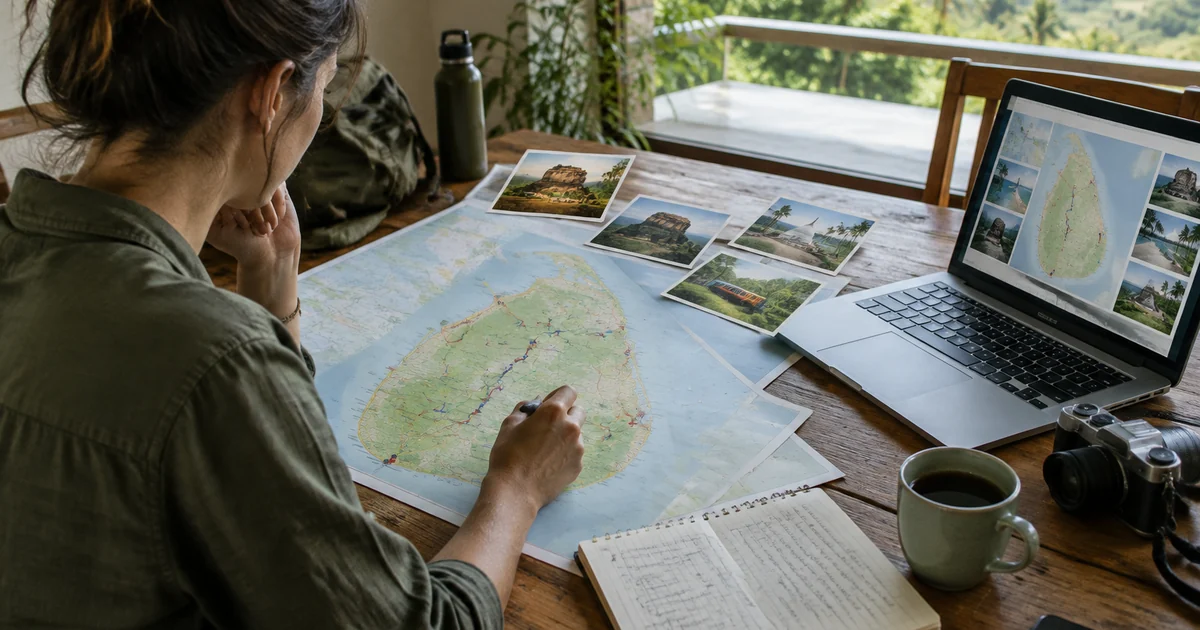
Quick answer: Tourism companies build a multi-day travel product in six stages: choose the target market, design a route that fits the season and realistic travel times, select components (hotels, transport, guides, activities and meals), decide what is included and excluded, cost the product with a margin, and test it for quality. In Sri Lanka, a typical 7 to 14-day product combines the Cultural Triangle, Kandy, the hill country, a national park and the coast.
Every ready-made holiday you see online started as a design problem: how to turn a destination into a product that is enjoyable, practical and profitable. Travel product design is a core skill in tour operations and tourism management. This guide explains the process step by step, using Sri Lanka as the example.
Stage 1: Define the target market
Products start with a customer. A honeymoon couple, a family with young children, a wildlife photographer and a backpacker all want very different trips. Designers consider:
- Who the travellers are: their age, interests and budget level.
- Where they come from, which affects flight times, holiday seasons and expectations.
- How long they can travel, often one or two weeks.
- What they want most: culture, nature, relaxation, adventure or a mix.
Stage 2: Design the route
A good route follows the seasons, avoids backtracking and keeps drives realistic. In Sri Lanka:
- Season: the south and west coasts are best from December to April, the east coast from about May to September.
- Distance: a 100 km hill country drive can take three hours or more.
- Flow: active sightseeing early in the trip, rest at the end.
A classic loop runs from the airport to Sigiriya and Dambulla, Kandy, the tea country, a safari park and the south coast.
Stage 3: Choose the components
A travel product is a bundle of services:
| Component | Examples in Sri Lanka |
|---|---|
| Accommodation | Boutique hotels, tea estate bungalows, beach resorts |
| Transport | Private car and chauffeur-guide, scenic train sections |
| Guiding | Chauffeur-guides, site guides, safari naturalists |
| Activities | Jeep safaris, whale watching, cooking classes, village tours |
| Entrance | Heritage sites, national parks, temples |
| Meals | Breakfast daily, some lunches or dinners |
Designers must make sure every component fits the route and the timing. For example, a morning safari needs a hotel close to the park.
Stage 4: Decide inclusions and exclusions
Clear inclusions avoid misunderstandings later. Products state what is included (such as hotels, breakfast, private transport and listed activities) and what is not (such as flights, some meals, personal expenses and tips). This list is one of the most important parts of a product description.
Stage 5: Cost the product
Costing adds up every component per person or per group, then adds a margin to cover the company's staff, marketing and risk. Costs change with the season, the hotel category, the group size and the vehicle. That's why many companies publish starting prices for set products and give personal quotes for tailor-made trips.
Most companies offer a range of ready-made products. The multi-day Sri Lanka tour packages offered by local operators, for example, range from short 5-day trips to two-week journeys covering the whole island.
Stage 6: Test and improve
Before launching, operators check that drive times, hotel quality and activities work in practice. After launch, they use guest feedback to adjust the route, swap hotels or change the pace.
Packaged vs tailor-made products
- Packaged products follow a set route and are easy to compare and sell.
- Tailor-made products start from a template but are changed for each traveller.
Many companies offer both: set packages as a starting point, and changes for each guest.
What tourism and hospitality students can learn
- Product development: how a destination becomes a sellable travel product.
- Supplier selection: choosing hotels, transport and activity partners.
- Costing and margins: the basic structure of tour pricing.
- Quality management: testing products and using customer feedback.
To explore courses in this field, see StudyWay's Hospitality & Events courses.
Frequently asked questions
What is a travel product?
A travel product is a bundle of services, such as accommodation, transport, guiding and activities, sold together as one trip.
What is the difference between a package and a tailor-made tour?
A package follows a set route. A tailor-made tour is designed or adjusted for each traveller.
Why do tour prices change by season?
Hotel and activity costs are higher in peak season, and demand is greater.
What should a tour description include?
The route, the hotels, a clear list of inclusions and exclusions, and the terms and conditions.
Which courses teach travel product design?
Tour operations certificates, travel and tourism management diplomas and hospitality degrees.
Related tourism guides
How to Plan a Trip to Sri Lanka: An Itinerary Planning Guide for Tourism Students
Learn itinerary planning with Sri Lanka as a case study: seasons by region, trip length, route design, visas and booking order, explained for tourism students and travellers.
Read guide
Sri Lanka's National Parks: A Study Guide to Wildlife, Conservation and Ecotourism
A study guide to Sri Lanka's national parks: Yala, Wilpattu, Udawalawe, Minneriya and Kumana, human-elephant conflict, ecotourism and responsible visiting.
Read guide
Sri Lanka Tourism Industry 2026: Statistics, Top Markets and Career Opportunities
Sri Lanka welcomed over 2.3 million tourists in 2025. Key statistics, the top source markets, industry trends and the careers and skills students need in tourism.
Read guide