
Event Management Courses and Careers in Sri Lanka
Last updated: 25 November 2026 · StudyWay Careers Team
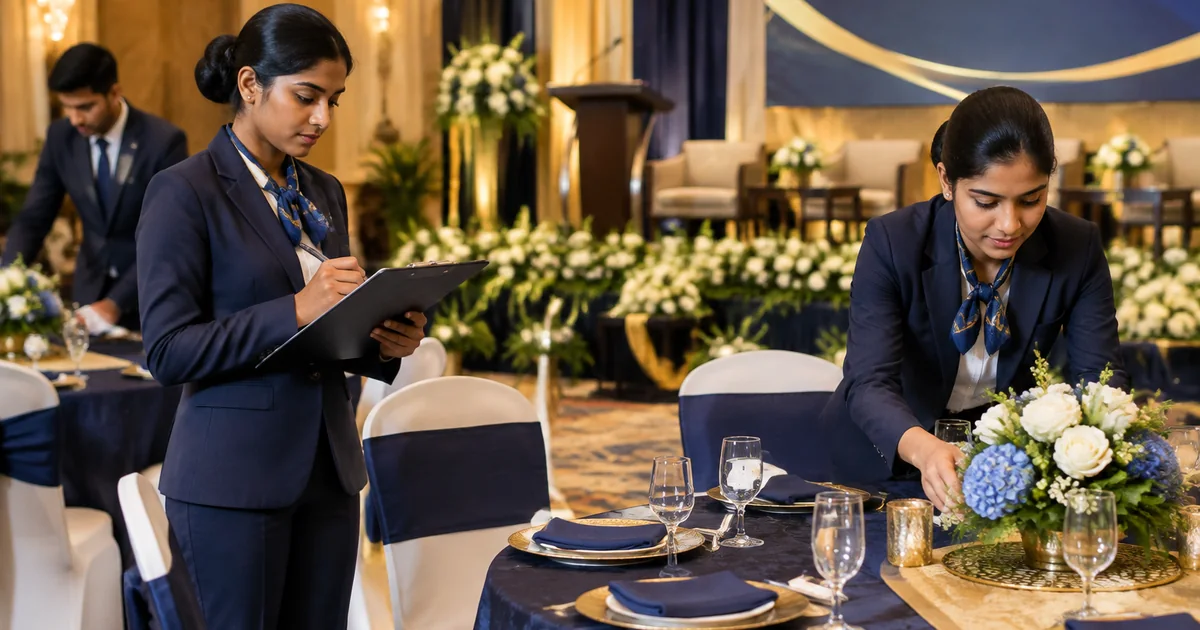
Weddings, product launches, concerts, conferences, sports events and corporate awards nights: Sri Lanka has a busy events calendar, and every event needs people to plan, coordinate and promote it. Event management suits people who are organised, calm under pressure and enjoy working with people.
Key takeaways
- Event management combines planning, supplier management, budgeting and promotion.
- Courses range from short certificates to diplomas and hospitality or business degrees.
- Hands-on experience at real events matters as much as qualifications.
- Digital marketing skills make event professionals far more valuable.
What event managers do
- Understand the client's goal, audience and budget.
- Find and book venues, caterers, AV, decorators and entertainment.
- Build timelines and budgets, and keep everyone on schedule.
- Handle permits, safety and guest logistics.
- Promote events and manage registrations.
- Run the day itself and solve problems as they happen.
Types of event careers
| Area | Examples |
|---|---|
| Corporate events | Conferences, launches, dealer meets, staff events |
| Weddings | Planning, coordination, décor |
| Entertainment | Concerts, festivals, shows |
| Hospitality | Hotel banqueting and events teams |
| Sports and exhibitions | Tournaments, trade fairs, expos |
Where you can work
- Event management companies, handling many events for different clients.
- Agencies that combine events with marketing. A full-service event management company in Sri Lanka often handles venue, production and online promotion together, so you learn both sides.
- Hotels and resorts, in banqueting and events teams.
- Corporate marketing teams organising their own events.
- Freelance, once you've built experience and supplier contacts.
Skills you need
- Organisation: checklists, timelines and attention to detail.
- Communication: working with clients, suppliers and guests.
- Budgeting: quoting, negotiating and tracking costs.
- Problem-solving: things always go wrong on the day.
- Digital marketing: promoting events on social media, running registration ads, and creating content during and after the event.
Courses
- Short certificates in event management or wedding planning.
- Diplomas and HNDs in event management, hospitality or tourism.
- Degrees in hospitality, tourism management or business, often with event modules.
Look for courses with industry placements, live event projects and lecturers who work in events.
How to get experience
- Volunteer at university, school or community events.
- Help at weddings and family functions, and document your role.
- Apply for event assistant or internship roles.
- Learn social media promotion. It's the part many event teams struggle with.
- Build a portfolio: photos, your role, budgets handled and outcomes.
To understand what corporate clients expect from an event agency, read this guide on how companies choose an event management agency.
Career path
Event assistant → event coordinator → event executive → event manager → senior event manager or business owner. Many experienced planners eventually start their own companies.
Frequently asked questions
Is event management a good career in Sri Lanka?
Yes, for people who are organised and enjoy working with people. Corporate events, weddings, hospitality and entertainment all need event professionals, and experience can lead to running your own business.
Which course is best for event management?
Choose a course with practical event projects and industry placements. Diplomas in event or hospitality management are popular after A/Ls, while hospitality or business degrees suit longer-term careers.
Can I work in event management without a qualification?
Yes. Many people start as event assistants or volunteers and learn on the job. A qualification helps with progression and with roles at hotels and larger companies.
Why do event managers need digital marketing skills?
Most events are now promoted on social media, with online registrations and content shared during and after the event. Event professionals who can do this are more valuable to employers and clients.